
The short answer
When comparing solar shades vs blackout shades, it helps to know that the products can look similar when installed. But for Johnson County homeowners, they solve very different problems with sunlight, privacy and room darkening.
Choose solar shades when you want to reduce glare and keep some daytime view. Choose blackout shades when privacy and stronger room darkening matter more.
That is the simple answer. The better answer depends on the room, the window direction and what happens there each day.
- Choose solar shades for glare control and a daytime view.
- Choose blackout shades for stronger privacy and room darkening.
- Use both when different rooms have different needs.
What solar roller shades actually do
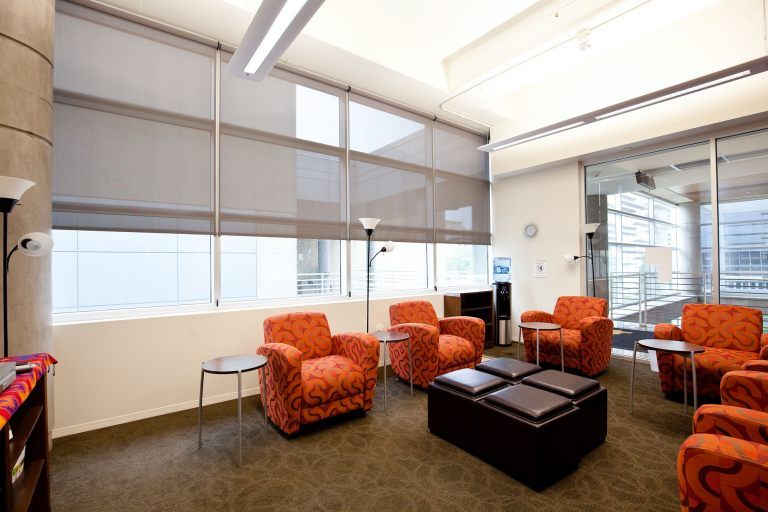
Solar shades filter strong sunlight and reduce glare. Depending on the fabric, they can also preserve a view through the window.
That makes them useful in living rooms, kitchens and home offices. These are spaces where you may want less brightness without making the room feel closed.
The fabric weave matters. A more open fabric normally keeps more of the outside view and lets more light through. A tighter weave filters more light and can improve daytime privacy.
And this is where samples matter. The same fabric can look quite different on an east-facing window in the morning and a west-facing window late in the day.
What blackout roller shades actually do
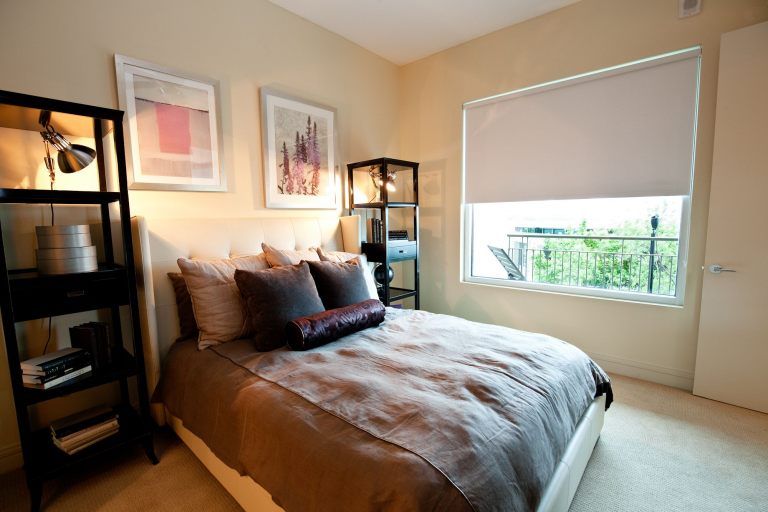
Blackout shades use an opaque fabric that blocks light through the material.
They are a strong choice for bedrooms, nurseries, guest rooms and media spaces. They also help when someone sleeps during the day or when bright exterior lighting enters the room at night.
Blackout fabric usually provides stronger privacy because you cannot see through it. But the finished installation still matters. Small lines of light may remain around the edges depending on the mounting position and window frame.
Solar shades vs blackout shades: the key differences
The decision becomes easier when you compare the things that affect everyday comfort.
Daylight and glare
Solar shades reduce bright light while helping the room stay open. Blackout shades remove much more light when lowered.
Privacy
Solar fabrics may offer useful privacy during the day. At night, interior lights can make the room visible from outside. Blackout fabrics provide stronger day-and-night privacy because they are opaque.
The outside view
Solar shades can preserve varying levels of view. Blackout shades close the view completely when lowered.
Room darkening
Blackout shades are the stronger choice when darkness is the priority. Solar shades are designed to filter light, not darken the room.
Edge light
Blackout fabric blocks light through the material. It cannot remove every possible gap around the shade. Mounting choices, side channels or layered drapery may help where stronger darkness is needed.
Choose solar shades when
- You want to reduce television or computer-screen glare
- The room receives strong daytime sunlight
- Keeping some outside view matters
- You want daylight without the full intensity
- The main need is daytime comfort rather than darkness
Choose blackout shades when
- The room is used for sleeping
- Nighttime privacy is essential
- A nursery needs stronger light control
- Windows face a media screen
- Exterior lighting is disruptive after dark
- You need an opaque fabric rather than a view-through weave
What the openness factor means
Solar fabrics are often described by an openness factor. This refers to the amount of open space in the weave.
A higher openness factor generally keeps more of the view and allows more light into the room. A lower openness factor provides stronger filtering and can improve daytime privacy.
Color changes the effect as well. Darker solar fabrics can create a clearer view to the outside. Lighter fabrics may feel softer and reflect more visible light into the room.
Specifications are helpful. Still, they do not replace seeing the fabric at your own window.
Do not overlook edge light
This detail deserves its own section because it shapes expectations.
An inside-mounted blackout shade needs a little operating clearance. That can leave narrow lines of light at the sides. An outside mount may provide more coverage when the wall and trim allow it.
For bedrooms, nurseries and media rooms, decide how much edge light is acceptable before ordering. If a near-dark environment is important, discuss the mount, side channels or layered treatments during the consultation.
Can one home use both?
Yes. In many homes, that is the best solution.
A living room may use solar shades for glare control. A bedroom may use blackout shades for privacy and darkness. A home office may need solar fabric on the window beside the desk and a different treatment elsewhere.
The fabrics can still feel connected. Choose a coordinated color family, similar hardware or the same operating style across the home.
You do not need one product everywhere. You need each room to work.
Room-by-room recommendations
Living rooms and kitchens
Start with solar shades when glare and an outside view matter. Consider the direction of the sun and when the room is used most.
Home offices
Solar fabric often works well for screen glare. Check the desk position and test the sample during the brightest working hours.
Bedrooms and nurseries
Start with blackout or another opaque fabric when darkness and nighttime privacy are priorities. Discuss edge light before deciding on the mount.
Media rooms
Blackout shades are usually the stronger starting point, especially when windows face the screen. Layered treatments may help when more coverage is needed.
A quick child-safety consideration
If young children are in the home, ask about cordless operating options for the specific shade. The U.S. Consumer Product Safety Commission recommends cordless window coverings as the safest option when young children are present. Read the CPSC window-covering cord safety guidance and confirm product details during your consultation.
Questions to answer before ordering
- When is the room brightest?
- Is nighttime privacy required?
- How much outside view do you want to keep?
- How dark should the room become?
- Is there enough depth for an inside mount?
- Would an outside mount give better coverage?
- How often will the shade move?
- Would motorized operation make daily use easier?
Compare the fabrics in your own light
The most useful comparison does not happen in a catalog. It happens at your window.
Inside Solutions helps homeowners in Shawnee and Leawood, as well as nearby Johnson County communities, compare solar and blackout fabrics in the rooms where they will be used.
You can review custom roller shades, explore dedicated blackout shade options and consider motorized shades for tall or hard-to-reach windows.
If you would like help deciding, schedule a free in-home consultation. We can look at the light, privacy and fit together, then choose the option that makes sense for each room.
 Custom Drapery in Johnson County: Curtains & Window Treatments
