
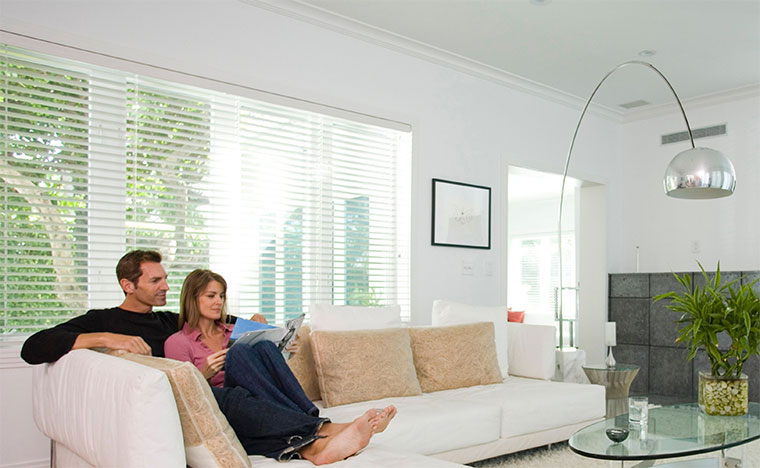
Start with the home, not the motorized blinds
The energy supply is one of the first practical decisions in a motorized shade project. It affects more than installation. It can influence where the motor fits, how the shade is maintained, whether electrical work is needed and how easy the finished system feels to live with.
Battery-powered and hardwired shades can both work well. The better choice depends on the stage of the home, the windows, the treatment size and how often the shades will move. A finished bedroom and a new-build living room may need very different answers.
So before choosing a motor or smart-home feature, look at the room. Is the wall already finished? Can wiring be planned? Will the battery be easy to reach? Are several large shades expected to move every day? Those questions usually point the project in the right direction.
Battery-powered blinds and shades: what to know
A rechargeable system uses a self-contained supply. Depending on the product, it may use replaceable cells or a rechargeable pack. The appeal is straightforward. These systems can be added without opening walls or running dedicated wiring to every window. That can make them practical for existing homes, individual rooms and projects where the homeowner wants to limit disruption.
A portable supply is not maintenance-free. It needs to be replaced or charged. Access matters: a battery pack on a standard window may be easy to reach, while a high window deserves more thought.
Where battery or rechargeable shades may make sense
Battery-powered shades are often worth considering when:
- The home is already finished and new wiring would add unnecessary disruption.
- Only selected windows need motorization.
- The shade is easy enough to reach when charging or battery replacement is required.
- The project needs a cleaner installation without a visible cable.
- The expected shade size and frequency of use suit the selected motor specification.
The last point must be confirmed rather than guessed. A small shade used twice a day and a large shade used repeatedly are not the same application.
Battery power, battery life and charging access
Charge intervals vary with shade size, motor type, frequency of movement and the selected product. That is why a broad promise about years of operation is not useful without an exact product specification.
Charging access also deserves attention. If the battery or charging connection is difficult to reach, a convenient motorized shade can create an inconvenient maintenance routine. There may also be visual details to consider. Charge packs, charging ports and connections should be reviewed before installation so the finished treatment remains tidy.
Wired motorized blinds: what to know
A wired motor connects to the home or building’s electrical system. The exact arrangement depends on the motor, controls and electrical plan.
Wired shades are often discussed during new construction or renovation because the wiring can be planned before walls and finishes are complete. They may also suit larger projects where many shades will be used regularly and the homeowner wants to reduce routine battery access.
Electrical work should be coordinated with the appropriate qualified trade. The window-treatment plan needs to identify motor locations, electrical requirements and control needs early enough for the wiring to support the final product.
When a wired setup may make sense
A wired setup is worth discussing when:
- The home is being built or renovated and wiring can be planned before final finishes.
- Several shades are part of one larger project.
- The windows are high or difficult to access for battery maintenance.
- The shades are expected to move frequently as part of a daily routine.
- The homeowner wants the supply integrated into a wider control or automation plan.
Hardwiring is not automatically the premium answer. It is simply a different planning approach. If wiring adds substantial work to a small finished-room project, a battery system may be more sensible.
Planning and service access for a wired setup
The main trade-off is planning. Wiring needs to reach the correct location, and the electrical work must match the selected motor. A late change to the shade specification can affect wiring that has already been completed.
Hardwired projects may involve more than one company. The window-treatment provider, electrician, builder or smart-home specialist may need clear responsibilities. It helps to decide who supplies the motor, who handles the electrical supply and who completes final control setup before the work begins. Future service access still matters. A wired motor may not need routine charging, but it can still require inspection or repair. The finished installation should not make normal service unnecessarily difficult.
Power options for motorized blinds: battery vs hardwired
A rechargeable setup may avoid opening finished walls. A wired installation can be planned while a home is being built or remodeled. Compare each shade’s size, how often it moves, service access, installation needs and selected controls.
- Existing rooms: check how the charge pack can be accessed.
- Renovations or new builds: discuss wire routes before finishes are complete.
- Several windows: compare the full project and control plan.
Battery power and smart-home control are separate choices
Power and control are connected, but they are not the same choice. A powered shade may use a simple remote, wall keypad, schedule or compatible automation system, depending on the exact motor and control platform. The available combinations depend on the motor and control platform.
Start with the preferred behaviour. One shade from a bedside remote? Several shades moving together? A regular privacy schedule? Integration with existing home controls? Once the routine is clear, the available supply and control combinations can be checked. Do not choose a motor based only on a familiar smart-home logo. Compatibility can depend on a hub, bridge, software version or additional component. Confirm the complete setup before ordering.
Think about the window treatment itself
The shade still has a job to do when the drive is idle. A bedroom may need blackout fabric and stronger privacy. A home office may need glare control. A living room may need filtered daylight and a coordinated appearance across several windows.
A different supply does not change those needs or remove edge gaps. It does not guarantee that an existing manual treatment can be converted. Product selection, measurement and mounting remain part of the decision.
Roller shades and motorized window treatments: controls and fabric choices
Power source does not determine the fabric or light control. A roller shade, cellular shade or another treatment should be selected for the room first; confirm which drive supports the model. Some systems connect through a smart home hub, but Google Home or Alexa compatibility varies by motor and bridge. Check Somfy’s compatibility guidance and verify the exact setup. Light-filtering fabric, room-darkening material and blackout options are separate choices from how a blind is powered.
Questions to answer before ordering
- Is the home finished, under renovation or still being built?
- How many shades will be motorized?
- How large are the treatments and how often will they move?
- Can the battery or charging point be reached safely and conveniently?
- Is electrical wiring already planned near the windows?
- Which control method will the household actually use?
- Does the selected motor support the required grouping or smart-home features?
- Who is responsible for electrical work, product installation and final control setup?
These questions do not need complicated answers. They simply prevent the supply decision from becoming an afterthought.
A practical rule of thumb
Choose by project stage and window access. A battery or wired setup may work in an existing room, renovation or new build; the final choice should match the selected shade, controls and product specifications. Inside Solutions helps homeowners across Overland Park, Lenexa, Shawnee, Prairie Village, Leawood and nearby Johnson County communities compare motorized window treatments in the rooms where they will be used.
During a free in-home consultation, we can review the windows, fabrics, mounting conditions, electrical access and preferred controls. Then we can narrow the options without adding technology that does not serve a clear purpose.
Review motorized blinds and shades, and schedule a free in-home consultation to check the wiring and control options for your specific windows. For cordless operation and household safety, read the CPSC window-covering cord guidance.
